Why Early Speech and Language Support Matters for Children in Madhyamgram
For many parents, a child’s first words, gestures, sounds, and conversations are important milestones. When communication seems slower than expected, families may wonder whether to wait, watch, or seek support. Speech and Language therapy can be part of that next step. Starting early gives families a chance to identify communication needs, build skills, and create more opportunities for children to connect.
According to the CDC, early intervention can help young children learn new skills and is more likely to have an impact when support begins earlier in life. ASHA also notes that early intervention for children from birth to age three may include speech-language professionals and family participation. Support can still help at later ages; an early start is an opportunity, not a deadline.
For families in Madhyamgram, Safollo Child Development & Therapy Centre can be a local point of contact when communication concerns arise.
1. Communication skills can develop during everyday routines.
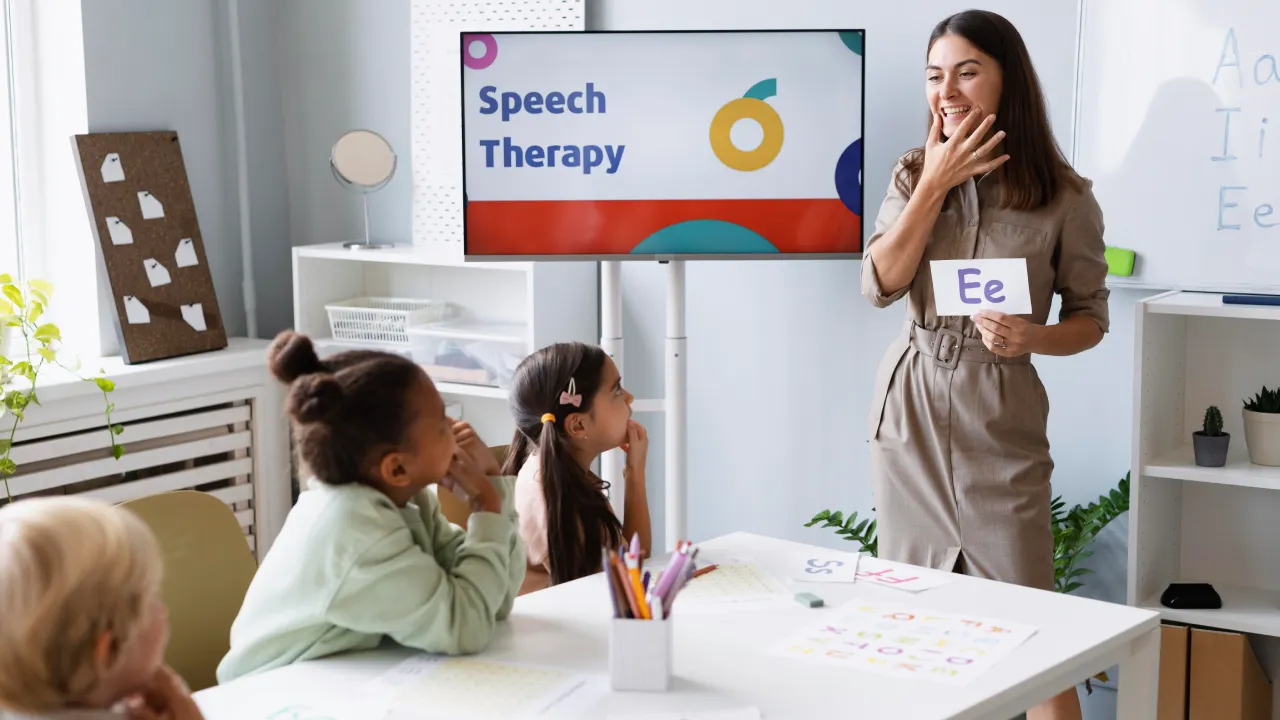
Speech and Language therapy can help children practise communication within activities they already enjoy. A session may use toys, books, pictures, songs, turn-taking games, or simple conversations. The aim is not only to practice words in a clinic room but also to help communication become part of daily life.
A child who is learning to request an item, for example, may practise pointing, using a word, combining words, or using another communication method. Parents can then repeat similar opportunities during meals, playtime, bath time, and outings.
This routine-based practice gives children many chances to communicate and helps parents notice which prompts, activities, and responses encourage participation.
2. Early support can address language delays before they affect other areas
Language is connected with how children learn, interact, play, and share ideas. A child with a limited vocabulary may also have difficulty telling someone what they want, answering questions, following longer directions, or joining a conversation.
Speech and Language therapy can focus on areas such as vocabulary, sentence formation, comprehension, social communication, and functional communication. The focus depends on the child’s age, abilities, and assessment findings.
The CDC advises parents to act when they have concerns about a child’s developmental milestones rather than waiting for the concern to disappear on its own. A developmental screening or communication assessment can help clarify what is happening and what steps may be useful.
3. Children get more opportunities to practice social communication.
Communication is more than saying words clearly. Children also need to learn how to take turns, respond to another person, request help, share attention, answer questions, and participate in simple exchanges.
Speech and Language therapy can create structured opportunities for these skills. Through play and interaction, children can practise looking toward a communication partner, waiting for a turn, responding to cues, and keeping an interaction going.
These skills may be useful at home, in preschool, at the playground, and during family activities.
4. Parents can learn practical ways to support communication.
Parents are a central part of a young child’s communication environment. ASHA describes early intervention as a team-based process in which parents and caregivers participate alongside professionals.
Speech and Language therapy can therefore include suggestions for everyday communication practice. Parents may learn how to expand a child’s short phrase, model useful words, create opportunities for requesting, read picture books interactively, or respond to a child’s gestures and sounds.
Small changes can fit into routines without turning the whole day into a lesson. For example, during snack time, a parent might pause before giving a preferred food, allowing the child a chance to gesture, vocalise, or use a word. During story time, the parent might point to pictures and ask simple questions.
5. Early assessment can clarify what kind of support a child needs.
A communication delay can have different causes and patterns. Some children have difficulty producing speech sounds. Others may have limited vocabulary, difficulty understanding language, challenges with social communication, or several communication needs together.
Speech and Language therapy usually begins with an assessment of communication abilities. Depending on the child’s situation, hearing, developmental history, play skills, comprehension, speech sounds, and other factors may also need consideration.
A clearer picture can help parents move away from guesswork. If concerns remain, a child’s pediatrician or another qualified healthcare professional may recommend additional evaluation.
Early intervention is a way to identify current needs and decide what support may be appropriate now.
6. Communication practice can support participation in preschool and school.
Children use communication throughout the school day. They need to listen to instructions, ask for help, answer questions, describe events, interact with classmates, and learn new vocabulary.
Speech and Language therapy can work on communication abilities that relate to these everyday demands. For a preschool child, this may include naming objects, following directions, combining words, or joining group interactions. For an older child, it may include more complex language, storytelling, conversation, or classroom communication.
Early attention to communication needs may also give families more time to coordinate with teachers and other professionals when appropriate. The goal is to help the child take part in daily activities using communication strategies that fit their needs.
7. Early support can reduce the impact of missed communication opportunities.
Young children learn through repeated interaction. When a child has difficulty communicating, they may have fewer opportunities to practise asking questions, sharing ideas, responding to others, or participating in conversations.
Speech and Language therapy can increase opportunities for active communication practice. Activities can be repeated, adjusted, and connected to the child’s interests.
The CDC notes that early intervention can help children improve abilities and learn new skills, while ASHA recommends starting early when communication concerns are present. At the same time, there is no single age at which support becomes pointless. Children can benefit from communication services at different stages of development.
How Does Speech and Language Therapy Help With Language Delays?
Language delay may appear in different ways. A child may use fewer words than expected, find it difficult to combine words, struggle to understand questions, have difficulty following directions, or find conversations challenging.
Speech and Language therapy can address receptive language, which involves understanding what other people say, and expressive language, which involves communicating thoughts, needs, and ideas. Sessions may use play, books, pictures, conversation, objects, and daily-life activities.
For example, if a child uses single words, activities may encourage combining two or more words. If a child has difficulty following instructions, practice may begin with simple directions and gradually introduce more information. If the main concern is social communication, sessions may focus on turn-taking, responding, shared attention, and conversational exchanges.
The approach should reflect the child’s current communication profile. Parents should also share observations from home, because communication can look different across settings.
A hearing check may also be relevant when a child has speech or language concerns. Hearing difficulties can affect access to spoken language, so families may be advised to discuss hearing with a paediatrician or audiologist when appropriate.
What Age Should Children Start Speech and Language therapy?
There is no fixed age for starting Speech and Language therapy. Children develop communication skills at different rates, but parents can seek an assessment whenever they notice concerns about speech, vocabulary, comprehension, or social communication. Early intervention may support children during important stages of language development, including infancy and the toddler years.
Signs that may warrant an assessment include limited spoken words, difficulty following simple instructions, trouble expressing needs, difficulty being understood, or loss of communication skills that were previously present. Some children may need regular sessions, while others may benefit from activities at home and periodic monitoring.
Developmental milestones provide general reference points rather than strict deadlines. A delay does not automatically indicate a disorder, but an assessment can help identify whether additional support may be useful.
For families in Madhyamgram, Safollo Child Development & Therapy Centre can provide access to child development and communication services. Parents can contact the centre to discuss concerns and arrange an assessment.
What Can Parents Do at Home?
Parents can create frequent communication opportunities at home. Speech and Language therapy can complement these daily interactions. Talk about what the child is doing, name familiar objects, read picture books, sing songs, give simple choices, and pause to allow the child time to respond.
Instead of asking many questions in a row, parents can also model language. If a child says “car,” a parent might respond with “red car” or “car goes.” If a child points toward a cup, the parent can model “cup” or “want cup.” These small exchanges can make communication practice part of ordinary routines.
Play is another useful setting. Follow the child’s interests, take turns, imitate sounds or actions, and add simple words to the activity. For older children, conversations about school, stories, games, and family events can create opportunities to practice vocabulary and sentence structure.
Consistency matters more than making practice feel like homework.
When Should Parents Seek an Evaluation?
Parents do not need to wait until a delay becomes severe before raising a concern. If a child is not meeting communication milestones, has stopped using skills they previously had, or seems to struggle with understanding or expressing language, it is reasonable to discuss the concern with a paediatrician or communication professional.
The CDC recommends talking with a child’s doctor when there are concerns about how a child speaks, learns, plays, acts, or moves. Families can also ask about developmental screening and possible referral pathways.
An evaluation is a starting point for information, not a prediction of a child’s future. Speech and Language therapy can then focus on the communication needs identified.
FAQs
1. Does every child with late talking need therapy?
No. Children develop at different rates, and a late start in talking does not automatically indicate a disorder. However, persistent concerns, regression, difficulty understanding language, or broader communication difficulties should be discussed with a qualified professional. An assessment can help determine whether monitoring, home activities, or regular sessions may be appropriate.
2. Can a child start therapy before age two?
Yes. Early intervention services can include communication support for infants and toddlers. ASHA specifically describes early intervention for children from birth to age three. Parents can discuss concerns as soon as they notice them rather than waiting for a particular birthday.
3. Is speech delay the same as language delay?
No. Speech relates to how sounds are produced and how spoken words are formed, while language involves understanding and using words, sentences, meanings, and communication rules. A child may have one type of difficulty or a combination of communication needs.
4. Can bilingual children have language delays?
Growing up with two or more languages does not by itself mean a child has a language disorder. A proper assessment should consider the child’s communication across the languages they use and the environments in which they communicate. Parents should share information about all languages spoken at home.
5. How long does therapy take?
There is no fixed number of sessions for every child. Duration can depend on the child’s communication profile, goals, response to practice, consistency, and other developmental factors. A clinician can discuss progress after assessment and during follow-up sessions.
Take the Next Step
If you are concerned about your child’s speech, vocabulary, comprehension, or communication, you do not have to wait for the concern to become larger. Starting with an assessment can help you learn more about your child’s current communication abilities and possible next steps.
Contact Safollo Child Development & Therapy Centre serves families in Madhyamgram from its centre on Subhas Pally Road, behind Paramhangsha Furniture, Bireshpally, Madhyamgram, Kolkata, West Bengal 700129.
Call us +91 99339 80126, The centre’s listed hours are 10:00 AM to 6:00 PM on all weekdays, except Thursdays.


Need Expert Child Care?
Get personalized treatment plans from experienced teams.
